TL;DR: Vendor lock-in in cloud computing occurs when proprietary services, data egress costs, or contractual commitments make migrating away from a cloud provider economically or technically prohibitive. Avoiding cloud vendor lock-in doesn’t mean avoiding managed services entirely; it requires deliberate architectural portability, containerization, software abstraction layers, clear exit strategies, and unified cross-cloud governance. Platforms like Cloud2gether give engineering and FinOps leaders continuous visibility into multi-cloud asset dependencies, egress liabilities, and proprietary sprawl before migration friction threatens your business.
Key Takeaways:
- Vendor dependency accumulates quietly over time: Convenience-driven architecture choices—such as proprietary databases or provider-only serverless APIs—turn into massive migration friction later.
- The four dimensions of cloud lock-in: Modern lock-in spans architecture lock-in, data & egress cost lock-in, contractual lock-in (multi-year spend commitments), and operational skillset lock-in.
- Proactive portability beats reactive migration: Decoupling workloads via open standards (OCI containers, Kubernetes, open database protocols) and software abstraction layers preserves architectural leverage.
- Exit strategies must be operationalized: A viable exit plan includes documented migration runbooks, data gravity assessments, and recurring portability audits.
- Unified multi-cloud governance restores control: Cloud2gether bridges the gap between infrastructure and finance, providing real-time visibility into proprietary service dependencies, tagging hygiene, and multi-cloud spend.
What is vendor lock-in in cloud computing? Meaning and modern reality
In enterprise technology, vendor lock-in in cloud computing refers to a situation where an organization becomes so deeply integrated into a single cloud provider’s proprietary ecosystem, APIs, or commercial terms that switching to another provider—or repatriating workloads on-premises—is cost-prohibitive, technically complex, or operationally paralyzing.
As National Science Foundation adoption data and industry surveys demonstrate, the vast majority of modern enterprises run mission-critical workloads on cloud infrastructure. Yet, while engineering teams migrate to cloud providers for speed, scalability, and reduced maintenance, few evaluate the cumulative impact of vendor dependency over time.
Vendor lock-in meaning in practice: It is rarely a single executive mandate to lock the company in. Instead, it is an incremental accumulation of convenient technical shortcuts—adopting a proprietary managed database here, relying on a vendor-specific messaging bus there, and signing an aggressive multi-year spend commitment—until moving workloads requires tens of millions of dollars in code rewrites and months of downtime risk.
At Cloud2gether, we observe that organizations that struggle most with cloud vendor lock-in are not those that made poor architectural choices, but those that failed to establish cloud portability guardrails early in their growth.

The 4 core dimensions of cloud vendor lock-in
To understand how to avoid vendor lock-in, organizations must first dissect where lock-in actually hides. In modern cloud-native environments, lock-in extends far beyond basic compute instances. It falls into four distinct dimensions:
1. Architecture and proprietary service lock-in
When developers build directly against vendor-specific services (such as AWS DynamoDB, GCP BigQuery, or Azure Cosmos DB) or proprietary serverless triggers, application logic becomes tightly coupled with the host cloud’s APIs. Rewriting these integrations requires redesigning data models, rewriting queries, and refactoring business logic, creating immense migration friction.
2. Data lock-in and egress transfer costs
Data gravity is one of the strongest lock-in mechanisms in cloud computing. Cloud providers typically allow inbound data transfer for free, but charge substantial data egress fees (outbound network transfer) when moving data out of their ecosystem or across regions. When an enterprise accumulates petabytes of object storage and analytics lakes, the financial cost of downloading or transferring that data to a secondary cloud can derail any exit plan. Furthermore, proprietary backup and storage formats compound the challenge.
3. Contractual and commercial lock-in
Major cloud hyperscalers offer steep enterprise discounts (such as AWS EDP, Azure Enterprise Agreements, or Google Cloud commit programs) in exchange for multi-year minimum spending commitments. If an organization’s architectural needs change or better technological options emerge, these rigid contracts penalize teams with minimum spend floors, termination penalties, or complex rollover clauses that eliminate commercial negotiation leverage.
4. Operational and skillset lock-in
Every cloud provider uses unique IAM architectures, deployment paradigms, networking configurations, and monitoring stacks. Over time, engineering teams develop specialized operational habits tailored exclusively to one provider’s console, CLI, and quirks. Switching or adopting a multi-cloud strategy introduces operational overhead if teams lack cross-cloud abstractions or unified tooling.
Spotting the warning signs of cloud lock-in early
While vendor lock-in risks are easy to recognize in hindsight, identifying the warning signs in real time protects budgets, business continuity, and engineering velocity. Look for these critical red flags across your infrastructure:
- Proprietary services handle core business domains: If your transactional data, event streams, or identity and access management (IAM) rely on vendor-exclusive engines rather than open standards, your migration friction is already dangerously high.
- Data egress fees spike when consuming external tools: If downloading datasets or connecting workloads to external analytics platforms results in punitive data transfer bills, your data gravity is trapping you.
- Infrastructure code cannot be repurposed: If your Infrastructure as Code (IaC) is written entirely in provider-locked formats (such as AWS CloudFormation or Azure Bicep) without modular abstractions or multi-cloud tools like OpenTofu/Terraform, migrating any environment means a complete rewrite.
- Total cost of ownership creeps upward without negotiation leverage: Cross-region data charges, unexplainable licensing uplifts, and single-vendor price hikes eat into margins while teams lack the leverage to switch.
- Zero documented migration runbooks exist: If engineering cannot explain or test how a workload would migrate to an alternate provider within 30 to 60 days, you have accumulated deep operational lock-in.
At Cloud2gether, we observe that even high-performing engineering teams inadvertently lose track of their dependency footprint as squads scale and cloud ecosystems continuously add enticing proprietary features.
Economic and operational consequences of vendor lock-in
The risks of cloud lock-in extend far beyond architectural elegance—they directly impact corporate valuation, operating margins, and product delivery timelines.
When an enterprise is locked in, the cloud provider holds absolute pricing leverage. Without a credible threat of workload portability, negotiating discounts or challenging contract terms becomes nearly impossible.
For finance and FinOps teams
- Unpredictable cost creep: Spending becomes captive to single-vendor price hikes and opaque network egress charges that resist FinOps optimization.
- Commercial rigidity: Multi-year enterprise discount agreements lock companies into minimum spending commitments, even when business downsizing or technology pivots reduce resource needs.
- Costly emergency exits: If vendor service degradations or geopolitical compliance mandates force a sudden migration, the unbudgeted migration costs can severely impair cash flow.
For engineering and product leaders
- Migration friction stalls the product roadmap: Shifting workloads off proprietary APIs requires massive engineering refactoring, pulling developers away from revenue-generating features.
- Slowed innovation and best-of-breed limitations: Teams are prevented from adopting superior machine learning, analytics, or database capabilities offered by competing providers because their stack is trapped.
- Hiring and onboarding bottlenecks: Engineering talent pools are limited when systems rely heavily on niche, proprietary provider services rather than universal open-source standards.
Consider a common industry scenario: a high-growth SaaS platform built its algorithmic recommendation pipeline using a specialized machine learning service exclusive to a single cloud provider. When an alternate provider released an equivalent model at one-fourth the cost with lower latency, the SaaS provider couldn’t migrate. The code was so tightly coupled to the proprietary SDK that refactoring would have cost $1.2 million and taken eight months. Unplanned lock-in had turned technical convenience into a massive business liability.
If you are planning an infrastructure transition, our guide on cloud migration benefits in 2025 explores how to modernize workloads while safeguarding portability.
How to avoid vendor lock-in: 5 proven multi-cloud strategies
Mitigating cloud vendor lock-in does not require avoiding public cloud features or running everything on bare-metal servers. Instead, it requires deliberate architectural discipline and proactive governance. Here are the five proven strategies we implement and recommend at Cloud2gether:
1. Standardize on containerization and open-source runtimes
The foundation of cloud portability is decoupling applications from the host operating system and cloud environment. Adopting open standards ensures workloads execute identically anywhere:
- Use OCI-compliant containers and Kubernetes: Packaging microservices into Docker/OCI containers and orchestrating them via Kubernetes (whether on AWS EKS, Google Cloud GKE, Azure AKS, or on-premises) allows compute workloads to transition seamlessly between clouds.
- Choose open-source database and message engines: Default to engines with universal support—such as PostgreSQL, MySQL, Redis, and Apache Kafka—even when consuming them as managed services. This guarantees your data schema and queries can move without application-layer changes.
- Avoid proprietary SDK dependencies: Avoid embedding vendor-specific SDK calls directly into your core business algorithms.
2. Implement software abstraction layers and clean architecture
When specialized cloud services (like object storage, secret managers, or pub/sub topics) are necessary, shield your application code with architectural design patterns:
- Apply Hexagonal / Ports and Adapters architecture: Decouple domain logic from infrastructure plumbing. If your application needs object storage, write an internal adapter interface that supports AWS S3, Google Cloud Storage, or MinIO interchangeably.
- Use vendor-agnostic Infrastructure as Code (IaC): Standardize infrastructure provisioning using Terraform, OpenTofu, or Pulumi. Maintain modular, reusable templates that can spin up environments across multiple providers.
3. Mitigate data gravity and egress transfer costs
Because data egress charges represent the primary financial hurdle to cloud mobility, managing data flow is critical:
- Adopt S3-compatible storage standards: Ensure all unstructured data uses open, S3-compatible APIs, allowing zero-friction synchronization between providers or decentralized storage networks.
- Distribute data thoughtfully: Keep primary analytical stores or data lakes in neutral or multi-cloud accessible environments to avoid massive one-time egress bills during migrations.
- Monitor outbound data transfer: Track network egress metrics weekly. Sudden spikes often indicate newly introduced architectural coupling.
4. Structure flexible contracts and protect commercial leverage
Never let procurement sign long-term cloud agreements without engineering and FinOps input:
- Negotiate data egress waivers and discounts: Many hyperscalers will reduce or waive egress fees for hybrid connections or multi-cloud interconnects if negotiated upfront.
- Shorten commitment cycles: Favor 1-year or tiered commitments over rigid 3-to-5-year agreements unless substantial flexibility clauses or workload transfer credits are included.
- Scrutinize renewal rollover terms: Ensure contracts do not automatically renew at non-discounted list rates without explicit written consent.
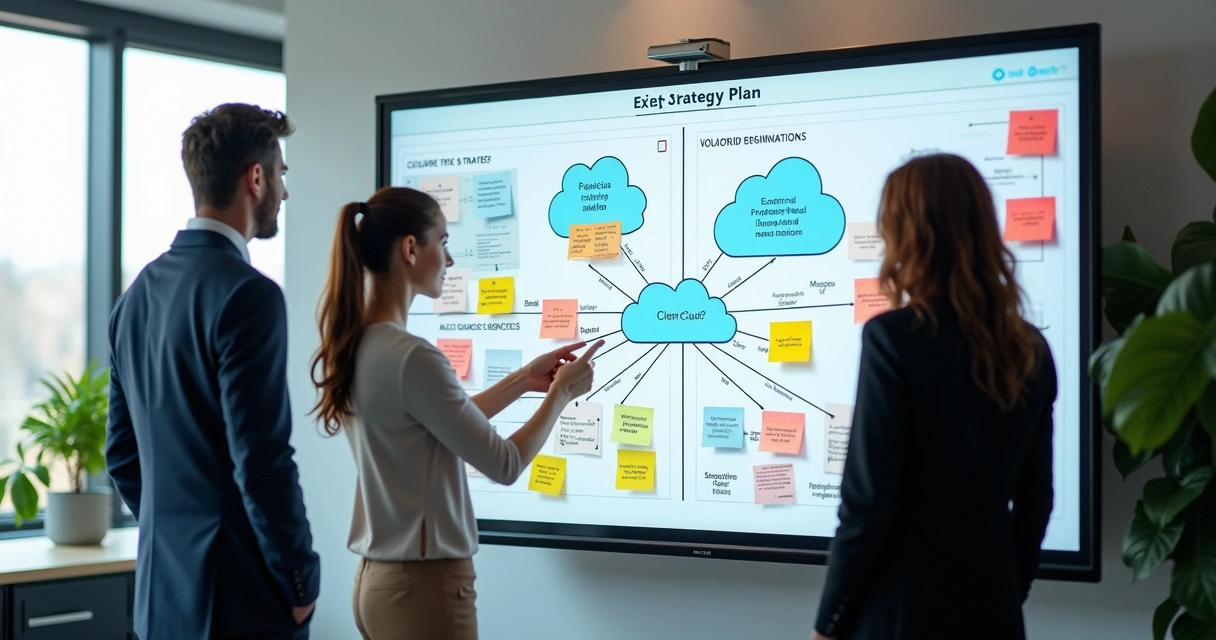
5. Build and drill an actionable cloud exit strategy
A credible exit plan is your ultimate insurance policy against vendor lock-in:
- Maintain updated migration runbooks: Document step-by-step procedures for extracting data, spinning up services in an alternate cloud, and redirecting DNS traffic.
- Perform annual portability drills: Treat exit preparedness like a disaster recovery drill. Test whether a non-critical microservice can be deployed to a secondary provider within a single sprint.
- Continuously track dependencies: Maintain an exhaustive inventory of all cloud resources, proprietary service linkages, and unstandardized configurations.
Evaluating service level agreements (SLAs) and exit clauses
Legal and procurement teams must collaborate with engineering leaders during contract negotiations. Opaque penalty clauses and complex termination requirements are among the most common reasons enterprises stay trapped in sub-optimal cloud environments.
When reviewing hyperscaler agreements and enterprise licensing:
- Clarify data extraction terms: Confirm that the provider imposes no contractual limits on mass data exports or offboarding assistance upon contract termination.
- Audit uptime credits vs. actual business losses: Standard cloud provider SLAs refund fractional service credits during outages, which rarely offset actual operational downtime losses.
- Avoid automatic rollover clauses: Ensure contracts require explicit renewal confirmation, preventing evergreen lock-in at non-negotiated rates.
The Cloud2gether advantage: Unified visibility and lock-in prevention
Preventing vendor lock-in across AWS, Microsoft Azure, and Google Cloud requires cross-cloud governance that single-provider native tools (like AWS Cost Explorer or Azure Advisor) inherently cannot provide. Cloud2gether provides the unified governance layer engineering and finance teams need to preserve cloud portability:
- Centralized Multi-Cloud Resource Catalog: Automatically inventories compute, storage, networking, and serverless assets across all cloud accounts and regions in one real-time view.
- Proprietary Service and Dependency Auditing: Identifies where applications rely on vendor-exclusive engines and tags high-friction services before they become architectural anchors.
- Cross-Cloud Cost & Egress Tracking: Delivers granular breakdown of daily spend and data egress charges, alerting FinOps teams to sudden egress spikes or cross-region inefficiencies.
- Tagging and Governance Compliance: Enforces standardized tagging across multiple providers, eliminating blind spots and ensuring clear workload ownership.
By unifying multi-cloud data into a single operational interface, Cloud2gether ensures your organization retains full pricing leverage, architectural autonomy, and the freedom to move workloads wherever performance and cost are optimal.
Take charge of your multi-cloud destiny. Discover how Cloud2gether eliminates operational blind spots and protects your architecture against costly vendor lock-in.
Recommended External References
- National Science Foundation: Cloud computing adoption
- Gartner: Multi-Cloud and Cloud Portability Research
- FinOps Foundation: Managing Data Egress and Multi-Cloud Costs
- CNCF (Cloud Native Computing Foundation): Open Cloud Standards
- AWS Architecture Center
Conclusion: Strengthen your cloud resilience today
Cloud vendor lock-in is rarely caused by a single catastrophic mistake; it is the natural byproduct of convenience-driven technical choices accumulated over years. By embracing containerization, standardizing on open protocols, establishing clean abstraction layers, and monitoring cross-cloud assets with Cloud2gether, your organization can leverage the power of public cloud providers without surrendering long-term freedom.
Don’t wait until migration friction threatens your product roadmap or budget. Build portability into your architecture today.
Frequently asked questions
What is vendor lock-in in cloud computing?
Vendor lock-in in cloud computing occurs when an organization becomes heavily reliant on a single cloud service provider’s proprietary technologies, closed APIs, data formats, or restrictive commercial contracts. As a result, moving workloads to another provider or back on-premises involves prohibitive costs, significant engineering refactoring, or substantial operational risk.
How to avoid vendor lock-in in a multi-cloud strategy?
To avoid vendor lock-in, organizations should:
- Standardize on open-source runtimes and OCI-compliant containers orchestrated by Kubernetes.
- Decouple domain logic from proprietary cloud SDKs using software abstraction layers.
- Choose open-protocol databases (e.g., PostgreSQL, MySQL, Redis) and S3-compatible storage.
- Maintain actionable cloud exit plans and test migration runbooks periodically.
- Use unified multi-cloud management platforms like Cloud2gether to maintain cross-cloud visibility and control.
How do data egress fees contribute to cloud vendor lock-in?
Data egress fees are network transfer charges that cloud providers levy when outbound data leaves their infrastructure. When organizations store large volumes of data (data gravity), the cumulative egress cost of downloading or synchronizing data with an external cloud can cost hundreds of thousands of dollars, effectively penalizing companies for attempting to migrate.
What are the main risks of cloud vendor lock-in?
The primary risks include price exploitation without competitive leverage, operational rigidity when provider outages occur, inability to adopt best-of-breed services from competing clouds, and massive technical debt when proprietary APIs are deprecated or altered.
How does Cloud2gether help prevent vendor lock-in?
Cloud2gether provides a unified multi-cloud control plane that catalogs assets across AWS, Azure, and GCP. It exposes proprietary dependencies, highlights unmanaged resources, monitors egress costs, and enforces tagging governance, giving leaders the continuous visibility needed to maintain architectural portability and commercial leverage.
Continue Your Cloud Strategy Journey
Before vendor lock-in limits your architectural choices, strengthen your multi-cloud foundation with actionable cost and complexity governance. Continue your reading here: